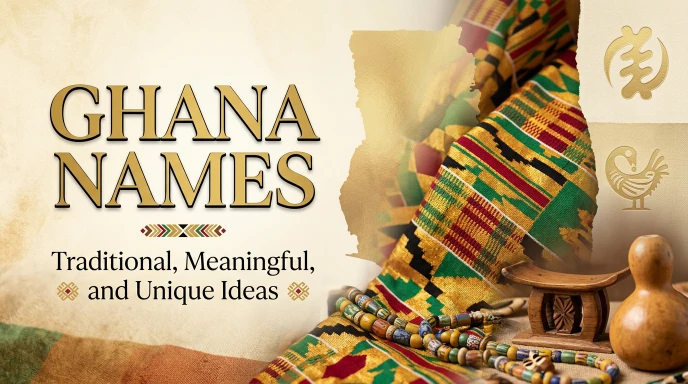
Ghana names reflect the country’s rich cultural heritage, family traditions, languages, and history. Many names from Ghanaian cultures carry meanings connected to birth, family, faith, personal experiences, and community values. If you are looking for Ghana names for a character, a naming project, or cultural research, understanding their origins can help you choose a name with greater care.
Ghana is home to several ethnic groups, including the Akan, Ewe, Ga Dangme, and Dagomba communities. Each group has its own naming traditions and languages. As a result, Ghanaian names come in many forms, and their meanings can vary by language, spelling, and cultural context.
One well known Ghanaian naming tradition is the Akan day name system. In many Akan communities, a child’s name may reflect the day of the week on which the child was born. Names such as Kofi, Kwame, Akosua, and Ama are familiar examples associated with particular birth days. However, Ghanaian naming customs extend far beyond day names, with family names and other personal names also playing important roles.
In this guide, you will discover Ghana names for boys and girls, popular Akan day names, traditional surnames, and unique choices from different Ghanaian naming traditions. You will also learn about naming customs and how to choose a name while respecting the culture and language behind it.
Quick Answer
Ghana names are personal names used by the many cultural and language communities of Ghana. Examples include Akan names such as Kofi, Kwame, Ama, and Akosua, along with Ga names such as Tettey, Dede, and Korkor. Many Ghanaian names reflect a person’s birth day, birth order, family background, or the circumstances surrounding their birth. The exact meaning and use depend on the language and tradition.
Popular Ghana Names for Boys
Ghanaian boys’ names come from several naming traditions. Akan day names are among the best known, while Ga and Ewe communities also have distinct names linked to family and culture.
| Name | Cultural context or naming association |
| Kofi | Akan name associated with Friday |
| Kwame | Akan name associated with Saturday |
| Kwaku | Akan name associated with Wednesday |
| Kojo | Akan name associated with Monday |
| Kwabena | Akan name associated with Tuesday |
| Kwadwo | Akan name associated with Monday |
| Yaw | Akan name associated with Thursday |
| Kweku | A spelling variant of Kwaku |
| Tettey | Ga name associated with birth order |
| Nii | Traditional Ga title used in male naming contexts |
The Akan names above follow the day name tradition, while Tettey and Nii belong to a different cultural naming context. Nii is a title, so its use should be understood within Ga traditions rather than treated as a direct equivalent of an Akan day name.
Popular Ghana Names for Girls
Ghanaian girls’ names include well known Akan day names and traditional names from other communities. Some names have spelling variations across languages and regions.
| Name | Cultural context or naming association |
| Akosua | Akan name associated with Sunday |
| Adwoa | Akan name associated with Monday |
| Abena | Akan name associated with Tuesday |
| Akua | Akan name associated with Wednesday |
| Yaa | Akan name associated with Thursday |
| Afua | Akan name associated with Friday |
| Ama | Akan name associated with Saturday |
| Dede | Traditional Ga name associated with birth order |
| Korkor | Ga name associated with birth order |
| Akweley | Ga name associated with twin births |
These names illustrate different naming patterns rather than a single system shared by every Ghanaian community. For example, Dede and Korkor can reflect birth order in Ga tradition, while Akweley is associated with twin naming.
Akan Day Names and Their Birth Days
Akan day names are a distinctive part of Ghanaian naming culture. In this tradition, a person’s name may reflect the day of the week on which they were born. Many days have commonly recognized masculine and feminine forms.
| Day of birth | Common masculine name | Common feminine name |
| Sunday | Kwasi | Akosua |
| Monday | Kwadwo | Adwoa |
| Tuesday | Kwabena | Abena |
| Wednesday | Kwaku | Akua |
| Thursday | Yaw | Yaa |
| Friday | Kofi | Afua |
| Saturday | Kwame | Ama |
These are common Akan forms, not universal names for everyone born in Ghana on those days. Spellings and related forms can vary, and other Ghanaian ethnic groups may use different day names.
For example
Kofi is a familiar Akan name for a boy born on Friday, while Ama is associated with a girl born on Saturday. If you are selecting a day name for cultural or family reasons, confirm the spelling and pronunciation used by the relevant family or community.
Unique Ghana Names
If you are looking for less familiar Ghanaian names, exploring names from different ethnic communities can offer more variety than choosing only widely recognized Akan day names.
Here are examples documented in Ga naming traditions:
- Adukwei : A name used in Ga Mashi communities.
- Lamile : A name found in Ga Mashi naming traditions.
- Okaija : A name documented in Ga Mashi communities.
- Korley : A name used in the Osu Ga community.
- Norley : Another name recorded in the Osu Ga community.
- Ashorkor : A name documented in Teshie Ga naming traditions.
- Mante : A name associated with the Tema traditional area.
- Akweley : A name associated with girls born as twins in Ga tradition.
These examples come from a report by the Ghana News Agency on Ga naming patterns. The source documents community usage, but it does not provide a verified meaning for every name. It is better to confirm a name’s meaning with a reliable language or cultural source than to guess from its sound.
Ghana Names and Their Meanings
The meaning of a Ghanaian name depends on its language and cultural context. Some names identify the day of birth, while others reflect family position, ancestry, or an event surrounding a child’s birth.
A few useful examples include:
| Name | What it indicates |
| Kofi | Akan day name for Friday |
| Akosua | Akan day name for Sunday |
| Kwame | Akan day name for Saturday |
| Ama | Akan day name for Saturday |
| Tettey | Ga name associated with a boy’s birth order |
| Dede | Ga name associated with a girl’s birth order |
| Korkor | Ga name associated with a girl’s birth order |
| Akweley | Ga name associated with twin births |
These are cultural associations, not all literal translations of the names. For instance, a day name tells you about the naming tradition and the day associated with the person; it does not necessarily describe a personality trait.
Ghana Surnames and Family Names
Family names are another important part of Ghanaian naming. They may connect people to their families, clans, or ancestral communities. However, naming patterns differ across Ghana, so not every surname can be assigned to one ethnic group based on spelling alone.
When researching Ghanaian surnames, consider these points:
- Family heritage: Ask which family or community uses the name.
- Regional context: Some names are associated with particular towns or traditional areas.
- Spelling variations: Names may have different spellings because of language, pronunciation, or historical recordkeeping.
- Family history: Oral histories and family records may explain why a surname is used.
- Cultural meaning: A name’s meaning may not be clear from a simple English translation.
Research on Ghanaian personal names documents naming traditions among Akan, Ewe, Ga Dangme, Nzema, Gonja, Dagbani, Dagaare, and other communities. This diversity makes it important to investigate each name within its own linguistic and cultural setting.
Ewe Names from Ghana
Ewe naming traditions include names connected to birth circumstances, family relationships, religion, and community life. Research from the University of Ghana describes how Ewe personal names can vary by age, region, gender, and religious influence.
When exploring Ewe names, remember that a name may have a meaning tied to a particular dialect or family story. Here are some examples of Ewe names worth researching further:
- Koku : A form associated with Wednesday naming in some Ewe communities.
- Kofi : A name also used in Ghana’s broader day name traditions.
- Ablá : A form recorded in Ghanaian day name references.
- Komla : A name found in Ewe naming contexts.
- Kossi : A related day name form used in parts of West Africa.
Some names appear across language communities, sometimes with different spellings or pronunciation. Therefore, verify the cultural context before assigning a specific meaning to a name.
Ga Names and Their Cultural Significance
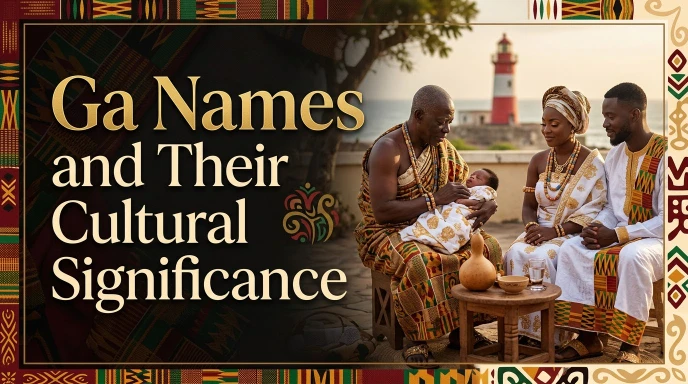
Ga communities around Accra use names connected to birth order, family or clan, twins, the day of birth, and other life circumstances. Some families also use appellations that add cultural or personal significance to a name.
Examples of Ga names documented by the Ghana News Agency include:
- Tettey : Commonly associated with firstborn boys in the reported tradition.
- Tetteh : Associated with second born boys in that tradition.
- Kwei : A name associated with birth order.
- Dede : Associated with firstborn girls in the reported tradition.
- Korkor : Associated with second born girls.
- Kai : Associated with birth order among girls.
- Akweley : Associated with girls born as twins.
These associations reflect the particular Ga traditions described in the source. Practices can differ by family and community, so they should not be treated as fixed rules for every Ga family.
Ghana Twin Names
Some Ghanaian naming traditions include special names for twins and children born after twins. These names can reflect family customs and the importance attached to twin births.
In the Ga tradition described by the Ghana News Agency, examples include:
| Name | Cultural association |
| Akwete | One of the names reported for twin boys |
| Akuete | Another name reported for twin boys |
| Akweley | A name used for a twin girl |
| Akuorkor | Another name used for a twin girl |
| Tawiah | A name associated with children born after twins in certain circumstances |
The exact combinations and order of these names may depend on the family’s tradition. If you are choosing a twin name for a real child, ask relatives or knowledgeable community members about the custom followed by your family.
How to Choose the Right Ghana Name
The best Ghanaian name depends on your reason for choosing it. You may want to honor family heritage, understand a name’s history, choose a name for a fictional character, or learn about Ghanaian culture.
Use these steps to make an informed choice:
- Identify the cultural tradition. Find out if the name is Akan, Ewe, Ga, or from another Ghanaian community.
- Check the meaning. Look for a reliable linguistic or cultural source. Do not rely only on informal lists.
- Consider birth day traditions. If you are exploring an Akan day name, confirm the relevant day and customary spelling.
- Ask about pronunciation. Listen to a fluent speaker when possible, especially if the name contains sounds unfamiliar to you.
- Explore family history. A name may reflect a family’s lineage, birth order, or personal history.
- Respect local customs. Some names have specific cultural associations, titles, or uses. Learn about these before adopting them.
A little research can help you appreciate not only how a name sounds, but also what it represents within its community.
FAQ’s
Q1. What are some popular Ghana names?
Popular and widely recognized Ghanaian names include Kofi, Kwame, Kwaku, Kojo, Akosua, Ama, Abena, and Adwoa. Many are Akan day names, although Ghana has several other naming traditions.
Q2. What are Ghana day names?
Ghana day names are names associated with the day of the week on which a person was born. The Akan tradition is particularly well known for this practice, with common examples such as Kofi for Friday and Akosua for Sunday. Other communities may use different forms.
Q3. What is a common Ghanaian name for a boy?
Kofi, Kwame, Kwaku, Kojo, and Yaw are familiar Akan names. Their traditional day associations are Friday, Saturday, Wednesday, Monday, and Thursday, respectively.
Q4. What is a common Ghanaian name for a girl?
Akosua, Ama, Abena, Akua, Adwoa, and Yaa are familiar Akan names. They are associated with particular days of the week in the Akan naming system.
Q5. Do all Ghanaian names have a meaning?
Many Ghanaian names carry linguistic, cultural, or family significance, but their meanings are not always simple to translate into English. Some identify a birth day or family position, while others relate to events, beliefs, or family history.
Q6. Are Ghanaian names different across ethnic groups?
Yes. Akan, Ewe, Ga Dangme, and other communities have distinct languages and naming practices. Some names overlap, but their spelling, pronunciation, or cultural associations may differ.
Q7. What are some unique Ghanaian names?
Names such as Adukwei, Lamile, Okaija, Norley, and Ashorkor are documented in particular Ga communities. Their use and cultural associations can vary, so verify the background of a name before choosing it.
Q8. How can I find the correct meaning of a Ghanaian name?
Start with sources from the relevant language community, academic research, cultural institutions, or a knowledgeable native speaker. Check spelling and regional variations, because similar looking names may have different origins or meanings.
Conclusion
Ghana names offer a window into the country’s many languages, family histories, and cultural traditions. From Akan day names such as Kofi, Kwame, Ama, and Akosua to Ga names connected with birth order and family heritage, each naming tradition provides a different way to understand identity and belonging.
When choosing a Ghanaian name, look beyond its sound. Research its language, pronunciation, and cultural context, and confirm its meaning with a reliable source. This approach helps you choose a name thoughtfully while respecting the community from which it comes.
Read More About!
Unique Bakery Names: Creative and Catchy Ideas
Dryad Names: Magical, Unique, and Nature Inspired Ideas
Names With M for Boy: Meaningful, Modern, and Unique Ideas

Hi, I’m Adrian Blake, a writer and name enthusiast at NameCentra. I’ve always been fascinated by how names can reflect personality, culture, meaning, and creativity.
I enjoy researching unique baby names, pet names, character names, fantasy names, team names, and other creative naming ideas. My goal is to make finding the right name simple, interesting, and enjoyable for every reader.






2 thoughts on “Ghana Names: Traditional, Meaningful, and Unique Ideas”